The government is bullish on Coal India and ONGC's stake sale programme which are to be held soon.

A special court on Thursday refused to accept a closure report by the Central Bureau of Investigation and directed it to further investigate an alleged scam in coal blocks allocation, involving Congress Rajya Sabha MP Vijay Darda, saying he had misrepresented facts in letters written to then Prime Minister Manmohan Singh.

Russia has welcomed India's decision to not support the price cap on Russian oil announced by G7 and its allies and offered it cooperation on leasing and building large-capacity ships to overcome the ban on insurance services and tanker chartering in the European Union and Britain to continue buying discounted oil. The offer came as Russian Deputy Prime Minister Alexander Novak held a meeting with the Indian Ambassador to Moscow, Pavan Kapoor, on Friday. "The Deputy Prime Minister welcomed India's decision not to support the price cap on Russian oil, which was imposed on December 5 by the G7 countries and their allies," the Russian foreign ministry said in a statement.
Bids for eight coal blocks were sent for re-examination.

The Supreme Court on Tuesday directed the Centre to provide "full co-operation" to Central Bureau of Investigation in its probe in coal block allocations scam by providing it with all necessary information and files without any delay.

According to sources in the agency, the counsel had been briefed about its stand which includes informing the apex court about 'certain moles' in the probe agency who were providing documents to people outside.

In 2021, the Railways boasted of a historic feat -- no passenger deaths in train accidents in two years. However, the derailment of the Bikaner-Guwahati Express in 2022 brought the Railways back to its forgetful past.

Rules for mining, roads, power and irrigation projects relaxed.

Contracting for the third month in a row, India's exports declined by 8.8 per cent to $33.88 billion in February due to slowdown in global demand, even as the trade deficit touched about a year low of $17.43 billion during the month, according to official data released on Wednesday. Imports also declined by 8.21 per cent to $51.31 billion as against $55.9 billion recorded in the corresponding month last year. Cumulatively, however during April-February this fiscal, the country's overall merchandise exports rose by 7.5 per cent to $405.94 billion.

Yes, India needs desperate measures to kick-start growth. But selling off its lungs to the highest bidder to hack away cannot be the way out, says Sumit Bhattacharya.

Both were rescued from the Shalimar-Chennai Central Coromandel Express that derailed near Bahanaga Bazar Station on June 2 that had claimed 275 lives and left around 1,200 injured.
India's exports rose marginally by 1.62 per cent to $33.92 billion, while trade deficit more than doubled to $27.98 billion in August due to increased crude oil imports, commerce ministry data said on Wednesday. The revised data showed that imports rose by 37.28 per cent to $61.9 billion in August this year. The preliminary data released by the ministry on September 3 had shown a 1.15 per cent decline in exports to $33 billion in August.

The ministry has also decided to offer station for redevelopment by inviting open bids from companies.
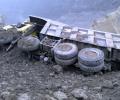
An inquiry has been ordered by the Director General of Mines Safety and a high-level committee of experts has been constituted by Coal India to investigate the causes of the accident.

China on Tuesday announced a major policy change for its crisis-ridden power sector by allowing coal-fired power plants to charge their industrial and commercial customers market-driven prices. The National Development and Reform Commission (NDRC) of China said the electricity generated by coal-fired plants would discover price in market trading "in an orderly manner" from October 15. This is being done to pass on the high costs of coal and is being held up as the boldest reform in the Chinese power sector.

Union Minister Jyotiraditya Scindia on Tuesday pitched for policy guidelines to utilise scrapped vehicles as raw material for steel production, saying there are close to about one crore such vehicles in the country. Scindia, who also holds steel portfolio, said the time is not far away when the country will have to move towards green steel, and therefore, the option of iron ore and coking coal will not be available. Green steel is manufactured without using fossil fuels.

Rajya Sabha was adjourned for the day on Friday amid an uproar in the House over the issue of law and order situation in Rajasthan.

The Finance Ministry has invited private sector bankers.

Total foreign direct investment into India rose 2 per cent to the "highest ever" $83.57 billion in 2021-22 on account of various measures like policy reforms and ease of doing business taken by the government, the commerce and industry ministry said on Friday. Total FDI comprises equity inflows, reinvested earnings and other capital. In 2020-21, the inflow stood at $81.97 billion. It was $74.39 billion in 2019-20 and $62 billion in 2018-19. "India has recorded the highest ever annual FDI inflow of $83.57 billion in 2021-22," the ministry noted in a statement.

Barring fertiliser, all seven sectors - coal, crude oil, natural gas, refinery products, steel, cement, and electricity - had recorded negative growth in May.

Soren is an accused in the Chirrudih massacre of 1975 in which 10 people were killed.

Sebi might come out with a regulatory framework for issuance of 'green' bonds

Shares of ING Vysya Bank and Kotak Mahindra Bank rallied by up to 6% on the BSE on reports that Kotak Mahindra Bank in final stages to buy the bank.

In a first, the Comptroller and Auditor General's (CAG) officers reached out to several ministries in the last week of April as part of a confidence-boosting measure. The meeting brought the CAG officials and those from the ministries across the table to discuss the pain points in their relations. CAG of India Girish Chandra Murmu took this novel step because of growing tensions between those audited and the auditor.
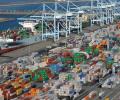
India's exports contracted 12.2 per cent to $34.48 billion in December 2022, mainly due to global headwinds, and the trade deficit widened to $23.76 billion during the same period, according to official data released on Monday. Imports in December 2022 also declined 3.5 per cent to $58.24 billion as against $60.33 billion in the year-ago period. In December 2021, exports stood at $39.27 billion and the trade deficit was at $21.06 billion.

Talking to PTI Amarjeet Kaur, General Secretary of All India Trade Union Congress (AITUC), said, "The two-day nationwide strike by the joint forum of central trade unions has begun this morning". About the impact of the agitation, she said that the entire coal belt (mining area) is affected in Jharkhand, Chhattisgarh and Madhya Pradesh. She also said that there is a good response in industrial areas of Assam, Haryana, Delhi, West Bengal, Telangana, Kerala, Tamil Nadu, Karnataka, Bihar, Punjab, Rajasthan, Goa, Andhra Pradesh and Odisha. The AITUC official noted that the banks and insurance sectors are affected all over India, while steel and oil sectors are also seeing partial impact due to the strike. Kaur said that she has got preliminary reports that markets are closed in Odisha.

The output of eight core sectors grew 8.9 per cent in June, mainly due to a low base effect and uptick in production of natural gas, steel, coal and electricity, official data showed on Friday. The eight infrastructure sectors of coal, crude oil, natural gas, refinery products, fertilisers, steel, cement and electricity had contracted by 12.4 per cent in June 2020 due to the lockdown restrictions imposed to control the spread of coronavirus infections. In May this year, these key sectors had recorded a growth of 16.3 per cent, while it was 60.9 per cent in April.
Exports rose by 24.22 per cent to a monthly record high of $38.19 billion in April on account of healthy performance by sectors like petroleum products, electronic goods and chemicals, even as trade deficit widened to $20 billion during the month, the commerce ministry said on Tuesday. Imports during the month under review grew by 26.55 per cent to $58.26 billion. The trade deficit in April 2021 was at $15.29 billion.

Barring coal, electricity and steel, all sectors -- crude oil, natural gas, refinery products, fertiliser and cement -- recorded negative growth in September 2020.

'I would put my hand in the ground and have a little listen to what the mountain was doing.' 'Actually, it was still collapsing.' 'And there was a very real possibility that at some stage, without warning, the collapse could continue -- and continue across us, the people who were doing the rescue and also across to the men on the other side, who were being rescued.'
.jpg)
Likely to set the ball rolling for Rs 1.72-lakh-cr projects today

The government has developed an asset monetisation dashboard for monitoring real-time progress of its ambitious Rs 2.5 trillion-plus pipeline, and providing visibility to investors. The portal has been prepared as the government tries to provide a one-stop shop to investors keen on taking over assets of government departments and ministries.
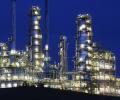
The output of eight core sectors rose 4.4 per cent in September on account of healthy performance by segments like natural gas, refinery products and cement, official data showed on Friday. The eight infrastructure sectors of coal, crude oil, natural gas, refinery products, fertilisers, steel, cement and electricity had grown by 0.6 per cent in September 2020, as per the data released by the commerce and industry ministry.

In a bid to protect the domestic paper industry, the commerce and industry ministry on Thursday said it has decided to make registration compulsory for importing major paper products such as newsprint, handmade paper, envelopes, among others. All imports arriving on or after October 1 will be governed by the Paper Import Monitoring policy that aims to put an end to dumping of such products and address the issue of re-routing of goods through other countries in lieu of trade agreements. "The import policy of major paper products has been amended from 'Free' to 'Free subject to compulsory registration under Paper Import Monitoring System," an official statement said.

P Chidambaram says all options are on the table.
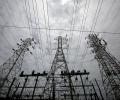
The output of eight core sectors jumped by 56.1 per cent in April mainly due to a low base effect and uptick in production of natural gas, refinery products, steel, cement and electricity, official data released on Monday showed. The eight infrastructure sectors of coal, crude oil, natural gas, refinery products, fertilisers, steel, cement and electricity had contracted by 37.9 per cent in April 2020 due to lockdown restrictions imposed to control the spread of coronavirus infection. In March this year, the eight sectors had recorded a growth rate of 11.4 per cent.

Reliance Industries has regained the top slot among Indian energy companies on the Platts global list

The output of eight core sectors declined by 4.6 per cent in February, the steepest contraction in the last six months which experts said could drag the overall industrial production in the month into the negative territory. All the key segments, including coal, crude oil, natural gas, and refinery products, witnessed a decline in production, according to the official data released on Wednesday. The growth rate of the eight infrastructure sectors -- coal, crude oil, natural gas, refinery products, fertilisers, steel, cement and electricity -- stood at 6.4 per cent in February 2020. Last time in August 2020, the sectors had recorded a negative growth of 6.9 per cent.

The intensity of power crisis this season has hit a new high with average coal stock dipping to less than eight days. The first of a pan-Indian series, based on a ground report, shows how the Manesar industrial hub is coping with the challenge. As the scorching heat wave and the lengthy power cuts intensify in Haryana, the usually bustling labour chowk of the Industrial Model Township (IMT) of Manesar wears a deserted look.
Exports in June rose by 23.52 per cent to $40.13 billion while the trade deficit ballooned to a record level of $26.18 billion mainly due to jump in gold and crude oil imports, the government data said on Thursday. The country's export growth in May was 20.55 per cent. Imports expanded by 57.55 per cent to $66.31 billion in June compared to the year-ago month, the data showed.
